

Skilled Trades and Construction
CPA managed accounting services and controllership for contractors and trades businesses.
Skilled Trades & Construction
Recognize the complexity?
Profitability by job is rarely clear
WIP and retainage aren't tracked cleanly
Intercompany allocations and shared costs lack discipline
Cash gets tight even when it shouldn’t
Tax season and lender reporting are painful
Staffing a competent accounting team behind the field is getting harder
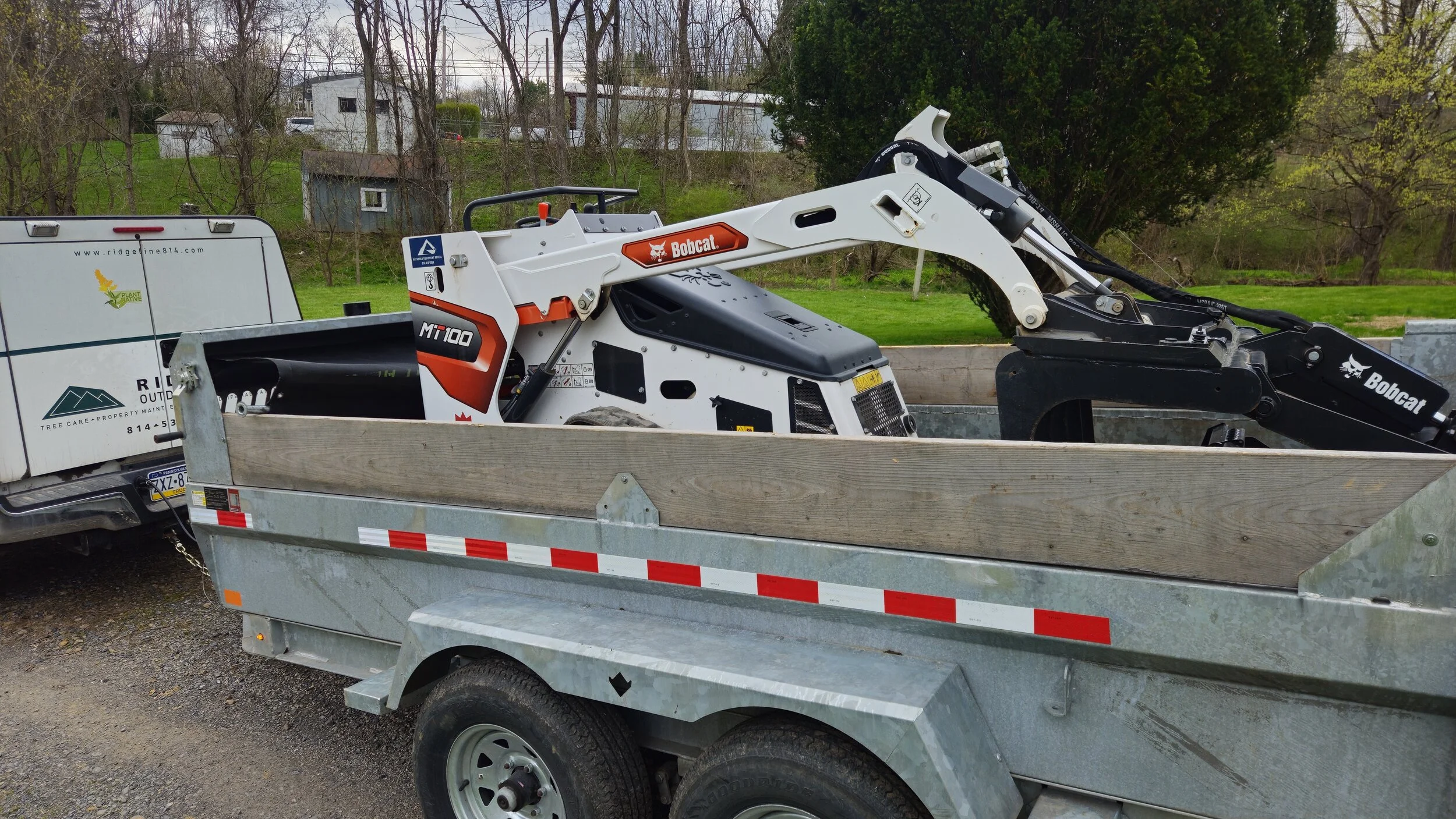

Controllership led by Trusted CPA’s
Managed accounting services, not fractional services. A contractor running multiple jobs and entities needs infrastructure.
It needs competent people to design and run that infrastructure.
Ridgeline Business Solutions does both. You own your data, we manage it.
Accounting Trust Pillars
-
Timely
Job costs and billings posted close to real time, so you know where a job stands while you can still act on it.
-
Accurate
A CPA owns revenue recognition and cost classification, and nothing authoritative posts until it clears review.
-
Complete
Led by a CPA with a background in audit and experience in the tree care and landscape contracting business. Every job, cost, and obligation is on the books, with no costs stranded in the wrong period before a bonding review or year-end.
-
Control
Control runs two ways, and Ridgeline delivers both. Inside the books it means safeguards: an approval gate on every dollar that moves and duties separated per COSO. For you it means command — a real-time read on job and company margin, with your hands on the wheel.
The Ridgeline Difference

Best in Class Onboarding
Our rigorous approach to onboarding sets the engagement up for success.
Onboarding is built around documentation and diagnostics. Each engagement is customized to your business.
Governance, Seriously
Fractional providers steer clear of the governance function. Ridgeline owns it. We cover the operational layer where governance lives, not just the downstream reporting.
Complexity, Handled
Multi-entity contractors, percentage-of-completion, and intercompany equipment and labor are the core of the work.
The Right Tools for the Job
We work with most major ledger systems including Quickbooks (Online and Desktop), Sage, Xero, all with integrations into your ERP including Service Titan, Housecall Pro, Jobber, LMN, Aspire, SingleOps, Procore, and more.
The Ridgeline difference? We built and continue to build our own proprietary tools to conduct our work upstream of the ledger. These include systems to document SOPs and institutional knowledge, property data, month close, and approvals. This suite of tools enable us to deliver the best services possible.
Ridgeline has it covered.
Full Charge Accounting:
Accounts Payable (Full Cycle)
Accounts Receivable (Full Cycle)
Credit Cards
Accruals and Estimates
Fixed Assets
Intercompany
Close, Consolidation, and Controls
Month-End Close
Balance Sheet Reconciliations
Standardized Chart of Accounts
Multi-Entity Consolidation
Intercompany Eliminations & Reconciliation
Fixed Asset & Depreciation Schedules
Approval Workflows & Internal Controls
Entity Registry & Ownership Mapping
Trades and Construction Accounting
Job Costing
WIP Schedules
Retainage Tracking
Percentage-of-Completion Revenue (ASC 606)
Committed Cost & Subcontractor Tracking
Change Order Tracking
Cost Allocation
Bonding & Surety Reporting
CFO Services
Valuation and Planning
Budget vs. Actual Variance Analysis
13-Week Cash Flow Forecasting
Audit & Tax Prep Support (year-end workpaper packages)
Comparing Scope and Qualifications
| Bookkeeper | Fractional controller | Ridgeline | |
|---|---|---|---|
| Professional Standards | None | Licensure varies; often not a CPA | CPA-led — professional and legal obligation stands behind every number |
| Scope | Categorizes transactions | Closes the books as is, part-time | Designs and runs the full accounting function |
| Governance & controls | None | Typically out of scope | Owned — approval gates on cash, duties separated per COSO |
| Multi-entity | Not their role | Sometimes | Standardized and built into the close |
| Lender & Job costing & WIP | Rarely | To varying degrees | Scheduled and systematized |
| Delivery Infrastructure | Works in your existing tools | Inherits whatever systems exist | Proprietary systems built upstream of the ledger |
| When they're out | Knowledge leaves with them | A single part-time point of failure | The work lives in the system, not one person |
Frequently Asked Questions
Still have questions? Take a look at the FAQ or contact us.
-
A bookkeeper records and categorizes transactions. Ridgeline owns job costing, the WIP schedule, revenue recognition, internal controls, and a CPA accountable for whether the numbers are right — so you can see job-level margin instead of waiting for year-end to find out.
-
Either. If you have a capable bookkeeper, Ridgeline sits above them and adds the job costing, controls, and reporting they aren't positioned to build. If you don't, we run the full function. The diagnostic determines the fit.
-
A fixed monthly fee, scoped to your job volume, entities, and complexity, and set after a diagnostic so the number reflects your actual operation rather than a generic tier.
You're buying a defined scope and a predictable cost for a service delivered, like any other contractor. -
Yes. Job costing assigns every labor, material, subcontractor, and equipment cost to the job that incurred it, maintained on a WIP schedule with over- and under-billings and retainage, so each project's true margin is visible while it's still running.
-
Yes. WIP schedules and financials are assembled to the format your surety and lenders require, kept current so a request isn't a scramble.
-
It's recognized through the period under ASC 606 and reconciled on the WIP schedule, rather than bolted on at year-end — which is what keeps reported margin honest as estimates change.
-
Ridgeline CPA is a licensed accountancy firm in Pennsylvania, #AF070771.
We do not currently provide individual tax preparation or attest/audit services. We do provide financial statement preparation and compilation services and file most business taxes. Under managed accounting services we coordinate the audit with the independent firm. -
AI organizes workflows and helps build and maintain financial infrastructure inside closed systems. It does not make authoritative accounting decisions or move money, and it never touches live financial data.